
I grew up around circular saws that looked like they’d been dropped off a roof twice and still showed up ready to work. As I got deeper into framing, I realized the real debate is not brand loyalty, it’s drive style. Worm drive and sidewinder saws both cut studs all day, but they feel different in your hands, pull differently through a cut, and they make different kinds of jobs easier.
This guide is how I think about it on a job site: torque and cut feel first, then weight and balance, then line-of-sight and ergonomics. By the end, you’ll know which saw fits the way you frame, not just what everybody else carries.
Quick definitions
Sidewinder (direct drive)
A sidewinder has the motor mounted alongside the blade, driving it directly. The whole package is usually lighter and more compact, and it spins up fast. Many traditional sidewinders are blade-right, but blade-left models are common too, especially in cordless lineups.
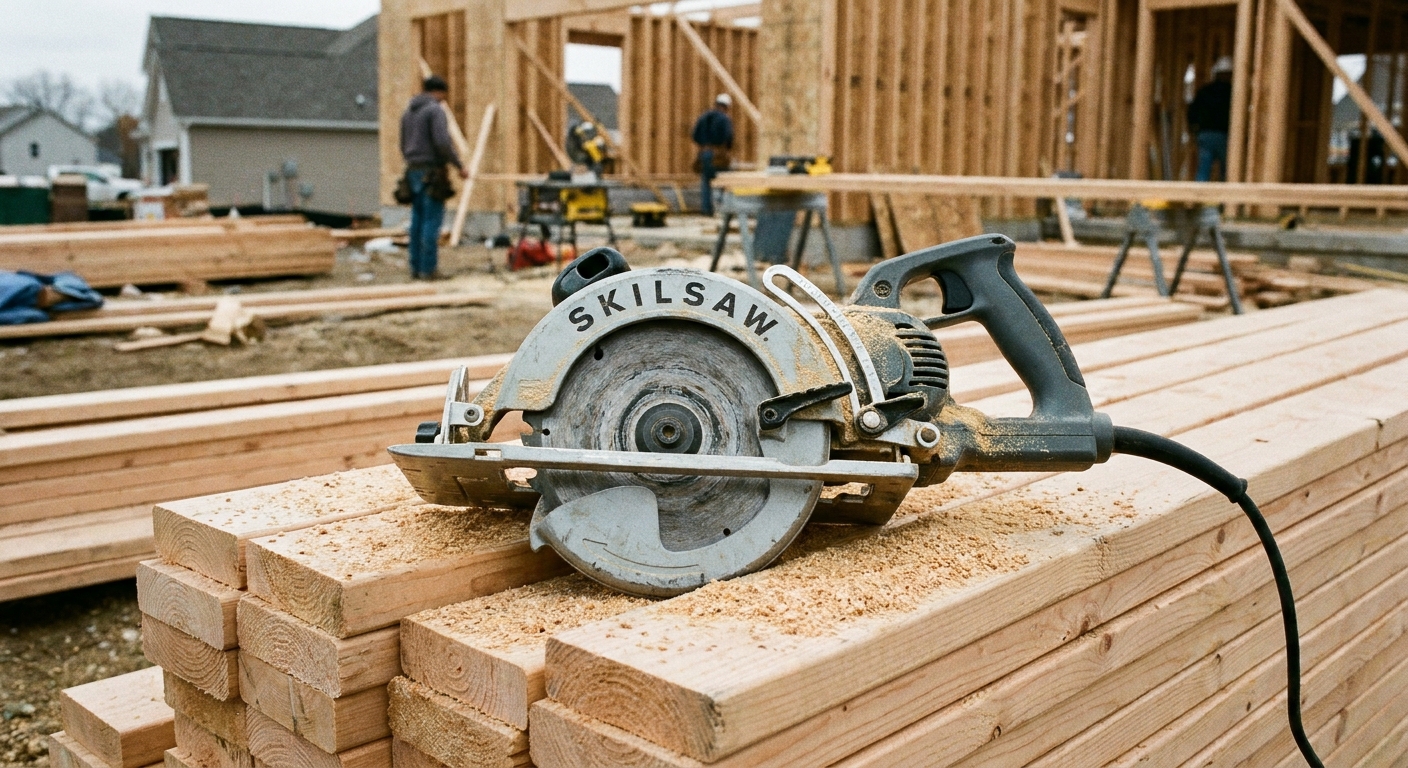
Worm drive
A true worm drive uses a worm-and-wheel gear set to transfer power from the motor to the blade. That gear case stretches the saw out longer. Traditionally, classic worm drives are blade-left and have a handle position that many framers find natural for long ripping and deep, steady cutting.
Worm drive vs hypoid
One thing that trips people up: not every long, rear-handle saw is a true worm drive.
- True worm drive: traditionally uses oil in the gear case and has that classic worm-drive layout and sound.
- Hypoid or “worm-drive style” rear-handle: similar feel and shape, but different gearing. Some are sealed or use grease instead of oil.
In your hands on a framing job, both rear-handle styles tend to feel “planted” compared to a compact sidewinder. For maintenance and parts, treat them differently and check your manual.
Torque and cut feel
People throw the word “torque” around like it’s a spec on a sticker, but what matters is how the saw behaves when the cut gets serious: wet lumber, knots, long rips, doubled material, or when you are cutting in a position that is not perfect.
Worm drive: steady pull in tough cuts
- More mechanical advantage: the gearing tends to keep the blade moving with less bogging when you lean into the cut.
- Lower RPM feel, more push: many worm drives run lower blade RPM than typical direct-drive saws, but they keep working under load in a way that feels smooth and steady.
- Where I notice it most: ripping 2x stock, cutting LVL or multiple plies, and repetitive bevel work where the saw is already working hard.
Sidewinder: fast and responsive
- Quick acceleration: it gets up to speed fast and feels nimble.
- Great for crosscuts: stud and plate cutting, blocking, and general punch-list framing is efficient.
- Modern motors matter: a good corded sidewinder has more than enough power for typical wall framing, sheathing, and day-to-day cuts.
My takeaway: if your day is heavy rips, beams, and thick assemblies, worm drive earns its keep. If your day is mostly crosscutting studs, cutting sheathing, and moving fast, sidewinder torque is rarely the limiting factor.
Weight and balance
On paper, a couple pounds does not sound like much. In real life, it shows up in your shoulders late in the day.
Sidewinder: lighter and easier overhead
- Less fatigue: easier for overhead cuts, ladder work, and quick repositioning.
- Better for mixed tasks: when you are bouncing between layout, nailing, trimming a stud, and cutting a brace, lighter wins.
Worm drive: heavier, but planted
- Stable in long cuts: the extra mass can dampen chatter and help the saw track straight.
- Trade-off: that same mass wears on you when you are cutting above shoulder height or working from awkward footing.
Line-of-sight
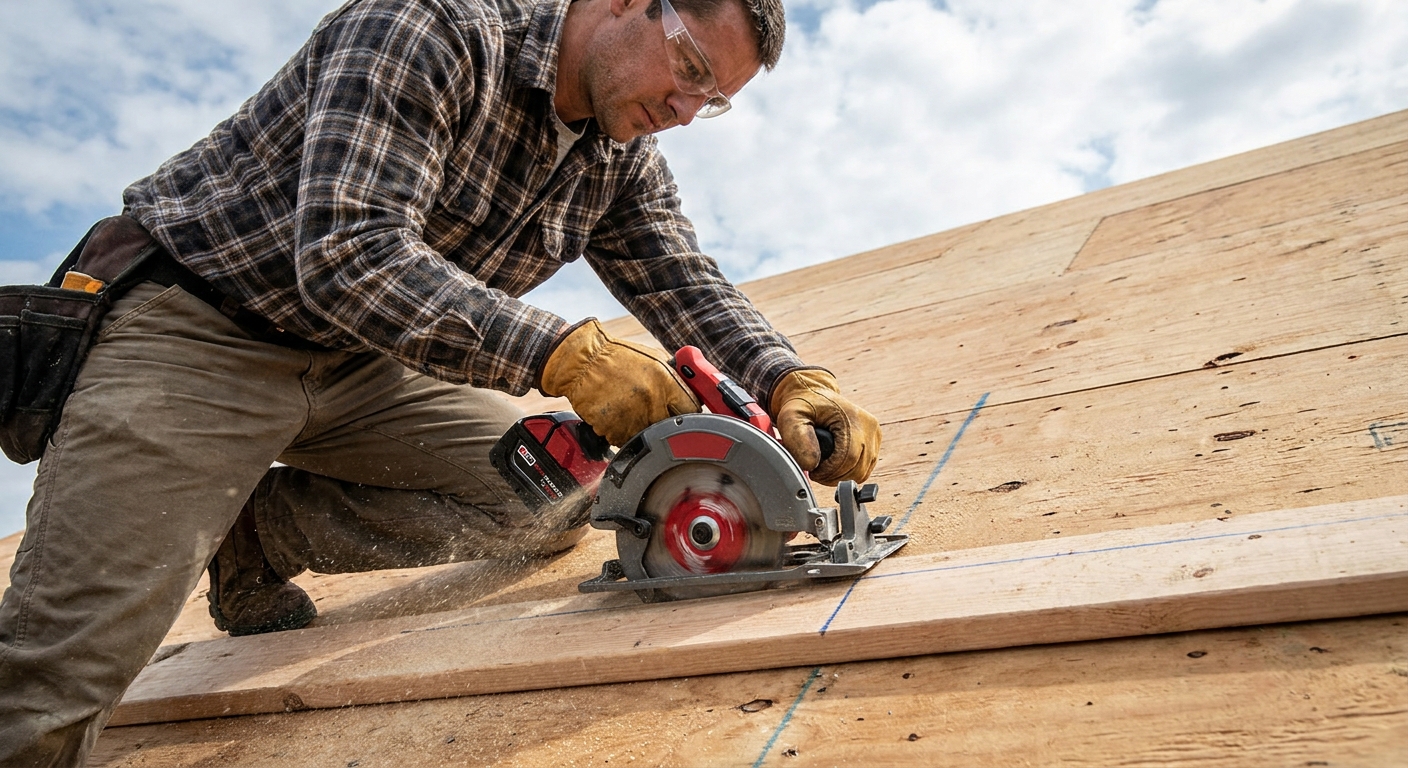
A lot of the “worm drive vs sidewinder” argument is often a “blade-left vs blade-right” argument. The best visibility depends on your dominant hand, how you stand, and whether you like watching the blade or watching the notch in the front of the shoe.
Blade-left is often easier for right-handed cutting
If you are right-handed, a blade-left saw often lets you see the blade and your cut line without leaning your head over the motor. That visibility is a big reason many framers love worm drives and rear-handle saws.
Blade-right can still be a great setup
A blade-right sidewinder can feel natural for some left-handed users, and some right-handed framers prefer keeping their body out of the saw’s line while watching the guide notch instead of the blade.
My practical advice
- Do not choose purely by blade side. You can get either blade orientation in many modern saw lineups, including some rear-handle models.
- Train yourself to use the front guide notch. When you rely only on watching teeth hit a pencil line, your neck pays for it and your accuracy gets inconsistent in awkward positions.
If you want to tighten up your layout accuracy so the cut line is doing less guesswork in the first place, see Avoid Mistakes Laying Out 16-Inch O.C. Studs.
Handling and ergonomics
Worm drive and rear-handle handling
- Longer body: can feel more controlled for ripping and beveling, but less convenient in tight spaces between studs or near corners.
- Rear-handle posture: many framers like the wrist alignment when pushing through a cut, especially on a subfloor or deck.
- Tracks well: the saw feels like it wants to go straight when you feed it steadily.
Sidewinder handling
- Compact: easier in remodeling, between studs, and when you need the saw to fit where your arm fits.
- Quick to reposition: great for rapid production cutting on horses.
- More sensitive to your feed rate: when you push too hard with a dull blade, it will tell you quickly.
For framing work where you are balancing accuracy and speed, tool choice pairs with process. If you want a good example of how I build accuracy into the work so cuts land clean, check out Make a Cut List Before Buying Wood.
Bevels and angles
Framers live on 90-degree cuts, but the jobs that separate clean work from hacked work are bevels and compound angles: rafter tails, fascia, stair parts, and odd roof tie-ins.
- Worm drives and rear-handle saws: often feel more stable on a bevel because the saw is longer and heavier. That helps keep the shoe planted when you are cutting at 45 degrees and your body position is not ideal.
- Sidewinders: can be just as accurate, but the lighter feel means you need to be deliberate about keeping the shoe tight to the work.
If you are doing roof layout, your saw choice matters less than your math and your marks. I put the fundamentals here: Mastering Rafter Math: Roof Pitch and Cut Lengths.
Corded vs cordless
Ten years ago, a lot of cordless circular saws were great at convenience and mediocre at heavy framing. That gap has tightened. Battery platforms keep getting stronger, and blade technology has improved. But drive style still affects feel.
Where cordless sidewinders shine
- Moving fast through punch lists, decks, small additions, and repair work
- Cutting sheathing, studs, blocking, and trim-out framing without dragging cords
- Working where power is limited or temporary
Where rear-handle saws still earn respect
- All-day production cutting where you want that planted tracking feel
- Long rips and thick assemblies where bogging costs time and accuracy
- Jobs where you consistently bevel or cut dense material
One note that matters either way: a sharp blade and the right tooth count will make a “weaker” saw feel stronger than a powerful saw with a smoked blade.
Maintenance and durability
Worm drive and rear-handle upkeep
Many true worm drives have a gear case that uses oil. That is not scary maintenance, but it is real maintenance. Some rear-handle “worm-drive style” saws are sealed or use grease instead. Check your manual and treat it like any other piece of production gear: if you ignore the maintenance long enough, the saw will remind you in expensive ways.
- Watch for leaks and keep the lubricant at the proper level per the manufacturer.
- Listen for gear noise changes. A rear-handle saw has a normal sound, but it should not sound dry or angry.
Sidewinder upkeep
Sidewinders are generally simpler. Keep the guard clean, keep the shoe true, and treat the cord or battery contacts with respect.
- Clean packed sawdust from the lower guard pivot so it snaps back reliably.
- Periodically verify your 0-degree and 45-degree stops if your work demands accuracy.
When I switch saws
Here is the real-world version of this debate on my jobs.
- Stack-cutting wall plates on horses: I grab a sidewinder. Light, quick, easy to pick up and set down a hundred times, and it does not beat me up.
- Ripping wet subfloor or long rips in 2x stock: I grab a worm drive or rear-handle saw. That steady pull keeps the cut straighter when the material is fighting back.
- Bevel runs like fascia or rafter tail work: I lean rear-handle if I have it nearby, mostly for stability and shoe feel.
Which one should you buy?
Pick a worm drive or rear-handle if you mostly do:
- New construction framing with lots of ripping and repetitive heavy cuts
- LVL, built-up beams, thick headers, and long bevel runs
- Roof framing where you want a planted feel on bevel cuts
Pick a sidewinder if you mostly do:
- General wall framing, sheathing, and fast production crosscuts
- Remodeling where you need compact handling in tight spaces
- Work that involves ladders, overhead cuts, and constant repositioning
If you can only own one
I tell most DIY builders and many pros to start with a quality sidewinder because it is lighter, versatile, and easier to live with. If your work trends toward heavy ripping and long days of cutting, add a rear-handle saw later. Plenty of crews run both and simply grab the one that matches the cut.
Details that matter
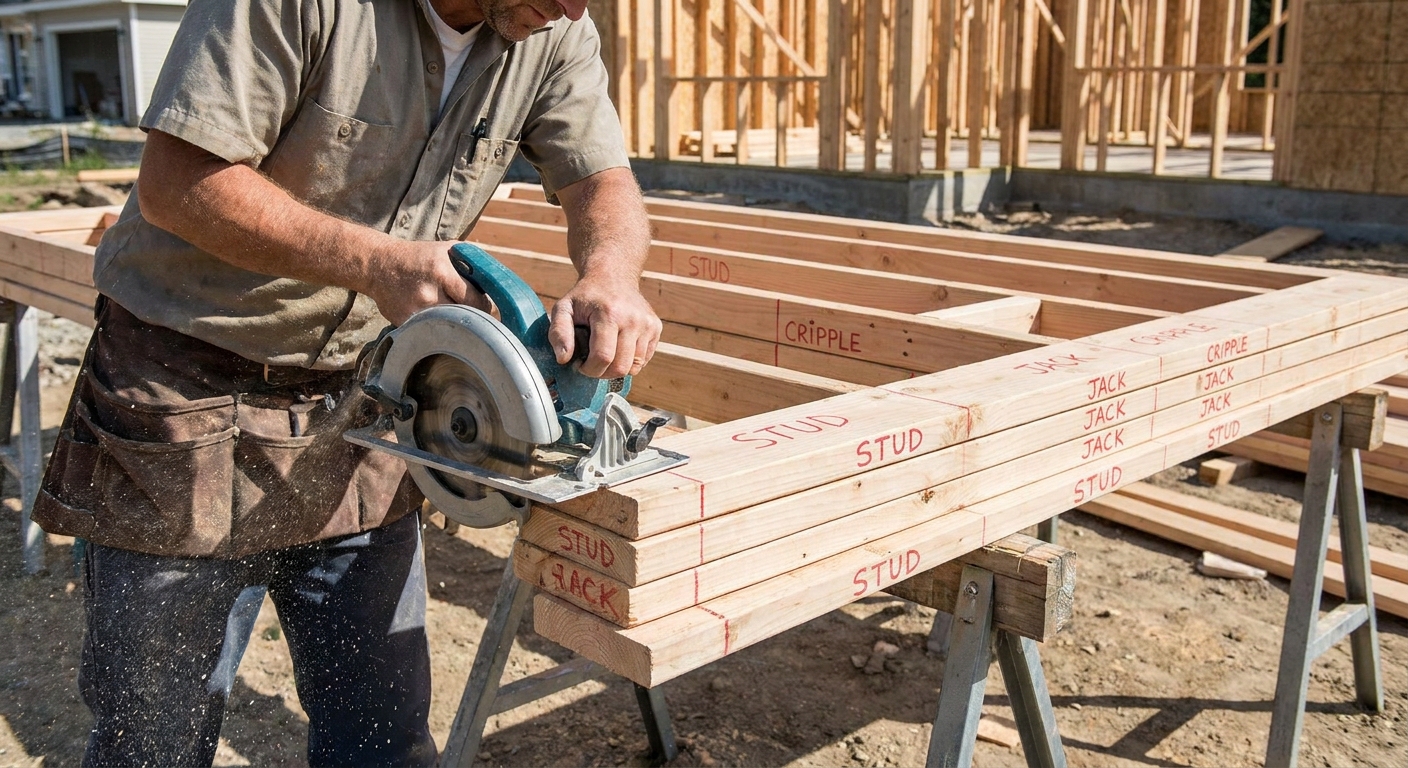
- Blade choice: a framing blade (around 24 teeth on a 7-1/4 inch) clears chips and cuts fast. Finer blades cut cleaner but can bog in wet framing lumber.
- Shoe stiffness: a rigid, flat shoe helps accuracy and reduces wander.
- Depth setting: set the blade so it only protrudes about 1/4 inch (roughly 6 mm) below the material. That puts the teeth where they cut efficiently and helps reduce the chance of a nasty grab. The “gullets just clear the bottom” idea is the why behind that setup.
- Support and offcuts: whichever blade side you run, support the work so the offcut can fall away without pinching the blade. Pinch equals bind, and bind is where kickback lives.
- Cord and hose management: if you are corded, get in the habit of throwing the cord over your shoulder or routing it behind you so you are not cutting toward it on a long rip.
- Dust and visibility: a clear line means safer, faster cuts. Keep the guard moving freely and clear packed dust.
And because framing is never just one tool, if you are building out your kit, start at the main hub: Tools Guide.
FAQ
Is a worm drive always more powerful?
Not always. Many corded sidewinders are extremely strong, and cordless performance varies by battery platform. Worm drives and rear-handle saws tend to feel stronger in sustained load because of gearing and how they deliver power through the cut.
Why do framers like blade-left saws?
For many right-handed users, blade-left improves line-of-sight to the cut. That is common on classic worm drives, but you can find blade-left sidewinders too.
Which is safer?
Both can be safe or unsafe. Safety comes from a sharp blade, correct depth, a functioning guard, stable work support, and a body position that keeps you balanced and out of the kickback zone.
Do I need a worm drive to frame a house?
No. People have framed a lot of houses with sidewinders. A worm drive is a preference and a productivity tool in certain cutting-heavy roles, not a requirement.