

I grew up hearing “measure twice, cut once,” but on a framing crew I learned the power-tool version too: pick the right driver before you start burying fasteners. Modern structural screws, ledger lags, and heavy connectors are fantastic, but they demand real torque and good control. Use the wrong tool and you will strip heads, snap bits, smoke a motor or clutch, or worse, end up with hardware that never fully seats.
This is how I decide between an impact driver and a high-torque drill when I am driving structural screws and lag bolts. One note up front: structural fasteners are not all the same, so I always give the box or spec sheet a quick read. Pilot holes, approved drivers, and even “no lubricant” warnings can vary by manufacturer.
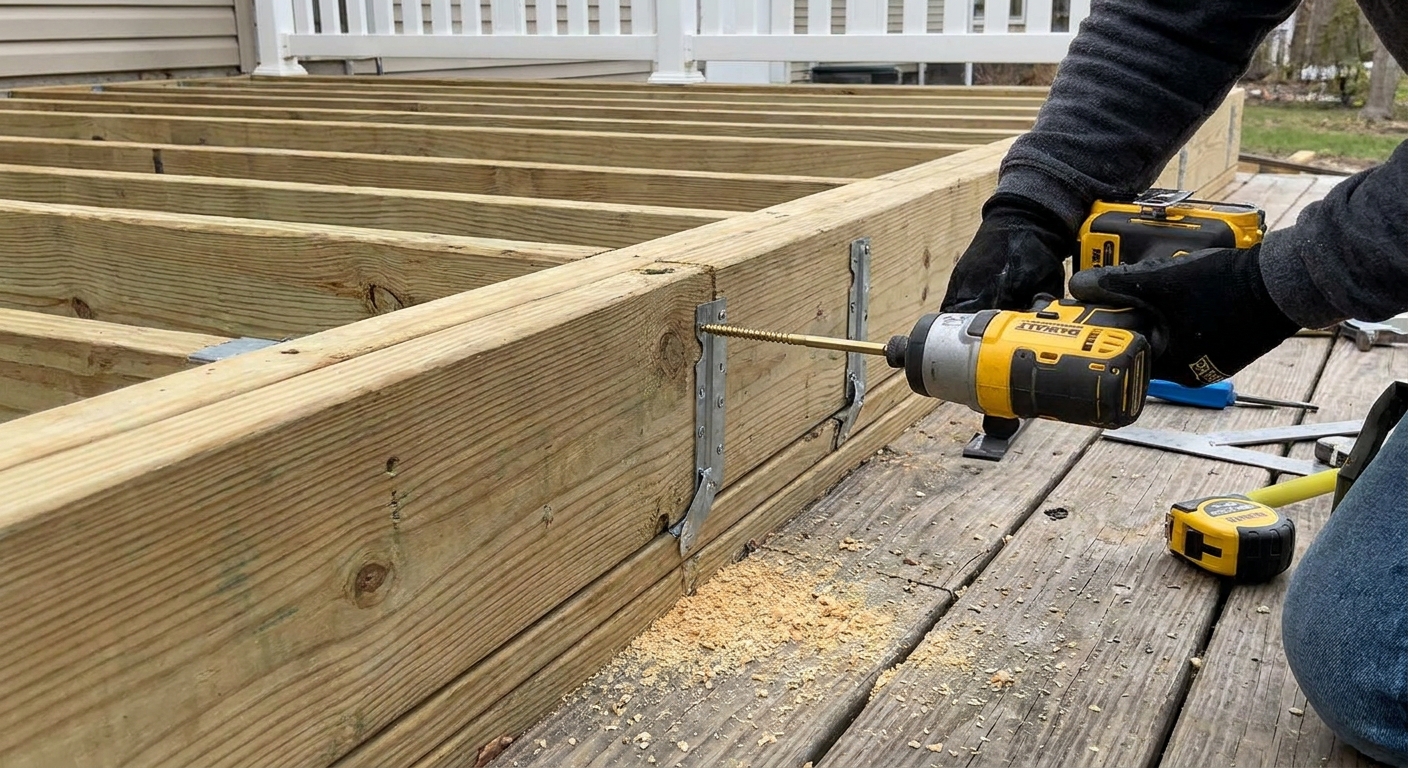
What you are really choosing
Impact driver in one sentence
An impact driver delivers torque in quick hammering bursts, which helps it keep turning under load without twisting your wrist as much.
High-torque drill in one sentence
By “high-torque drill,” I mean a heavy-duty 1/2-inch drill or drill-driver with a strong low gear and a side handle (often clutchless, sometimes with a clutch depending on the model). It delivers steady rotational power, which gives you smoother control and better feel as a fastener tightens.
In the real world, the decision comes down to four things:
- Fastener size and length (big diameter lags behave differently than long skinny structural screws)
- Material resistance (dry LVL, PT lumber, old-growth framing, engineered rim boards)
- How precise the final tightness needs to be (hardware seating, crushing wood fibers, gasketed washers)
- Fatigue and safety (wrist twist, kickback, overhead work, ladder work)
Why these fasteners drive differently
Two fasteners can both be “structural” and still drive completely differently. The bigger point is this: traditional lag screws and proprietary ledger screws are not interchangeable in how they install.
Long structural screws (ledger screws, SDWS-style, RSS-style)
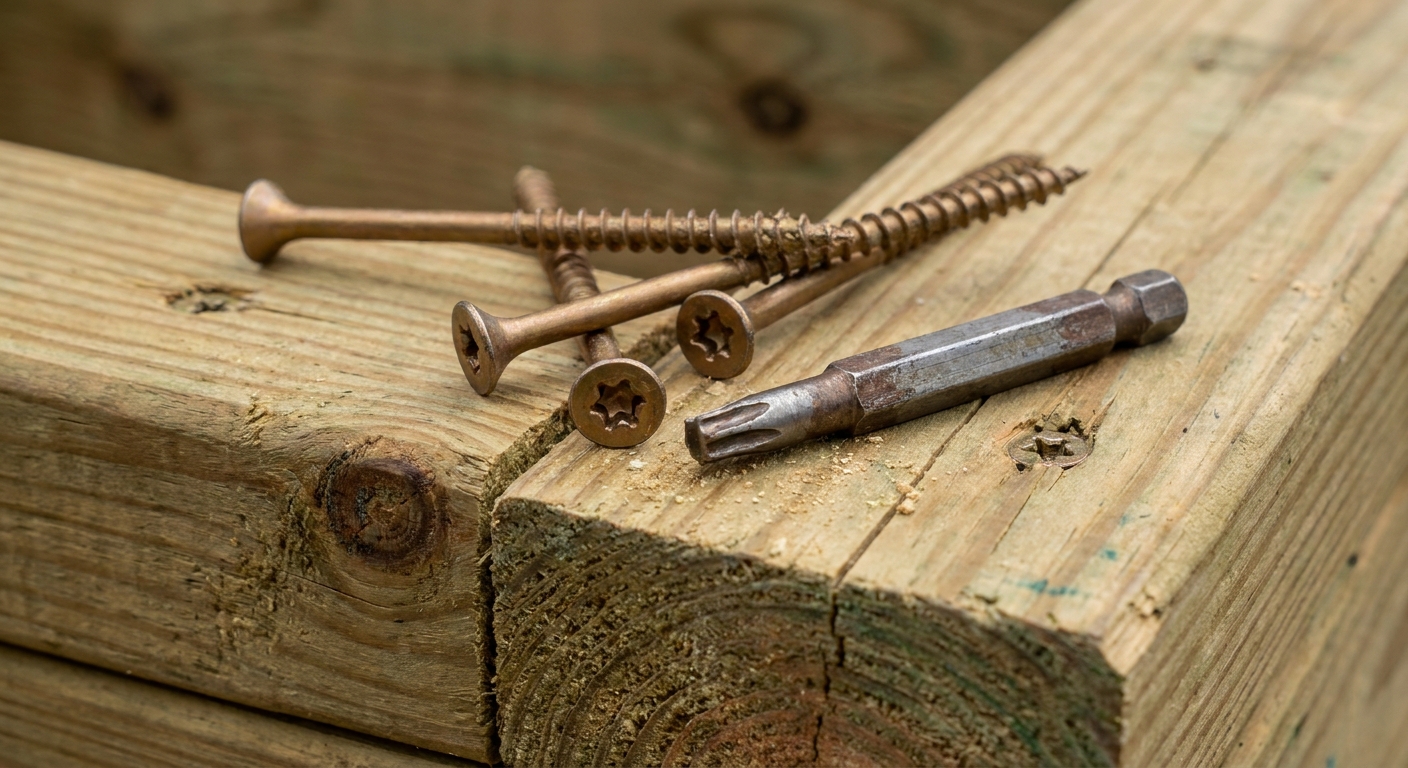
These are often long and relatively slim, with aggressive threads and a Torx or hex head. They usually like speed and consistent driving, and they can generate a lot of friction heat over the run of threads. Many of them drive great with an impact driver, especially when you are sinking a bunch of them in a row. Some manufacturers also specify a drill instead of an impact (or a pilot in certain conditions), so I treat the instructions as part of the “tool choice.”
Traditional lag screws with washers
Big diameter lags behave like a wedge. They can demand a lot of continuous torque near the end of the drive, especially if you are cinching hardware tight to wood or pulling a ledger tight to sheathing. This is where a high-torque drill starts looking better, because the torque is smoother and easier to control at the finish.
For deck work specifically, I treat ledger attachment like “structural surgery.” If you are doing a deck ledger, read through Installing a Deck Ledger Board as well, because layout, flashing, and proper bearing matter just as much as what tool you drive with.
When an impact driver is the right call
If I had to pick one tool to carry around a job site for mixed fastening, it is the impact driver. Here is where it shines for structural screws and many ledger fasteners.
1) Driving lots of structural screws efficiently
Impacts excel at repetitive driving because the hammering action helps keep the tool moving under load without stalling as easily. It can also help the bit stay seated when everything is aligned and the bit is fresh. The tradeoff is that the hammering can make cam-out worse if your bit is worn or you are even slightly off-angle, so clean alignment and good bits matter.
2) Working on a ladder or in awkward positions
The impact’s bursts reduce sustained reaction torque. You still need a firm grip, but it is generally less likely to wrench your arm when the screw binds. That matters when you are stretched out tying a ledger or installing hardware overhead.
3) Smaller diameter structural fasteners
For smaller structural screws, the impact is often the cleanest, simplest solution. Once you get into the 1/4-inch to 5/16-inch range, results get brand and material dependent, so I follow the fastener manufacturer’s install instructions for driver type and pilot requirements.
Impact driver setup tips that prevent headaches
- Use impact-rated bits. Structural fasteners are hard on tips. Standard bits round over fast.
- Keep the bit fully seated. Torx heads strip when you are a little cocked or only half engaged.
- Feather the trigger at the end. An impact will happily overdrive a fastener and crush fibers if you just hold it wide open.
- Pre-drill when the manufacturer calls for it. In dense species, near end grain, or near edges, pre-drilling prevents splitting and reduces drive torque.
When a high-torque drill wins
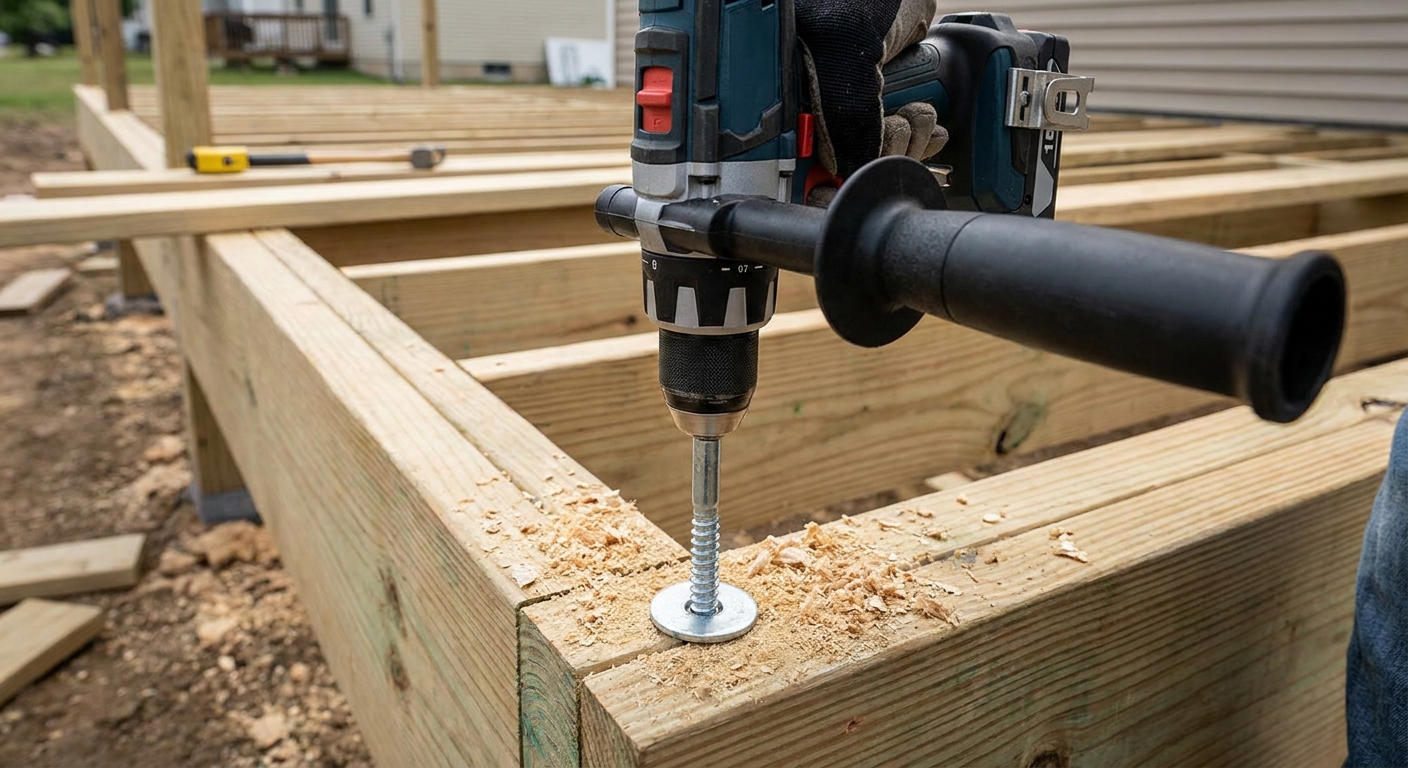
A high-torque drill earns its keep when you need sustained, controlled rotational power. If your drill accepts a side handle, use it. Structural work is not the place to “muscle it” barehanded.
1) Big lags and hardware that must seat cleanly
If I am driving 3/8-inch or 1/2-inch lags, or cinching a ledger tight with washers, the drill usually gives me better control for that last half turn. You can feel the washer compress, feel the joint snug, and stop before you crush the wood fibers.
2) Traditional lag screw best practice
With traditional lags, “done by the book” often means a clearance hole through the outside piece (ledger or hardware) and a pilot hole into the framing member, then washer and lag. That keeps the ledger tight to the house instead of “jacking” on threads. Proprietary ledger screws are different, and many are designed to go in without a clearance hole, so again, I follow the specific fastener schedule and instructions.
3) Avoiding head snap and fastener damage
Impacts can be brutal when something binds hard at the end. With a drill, you can slow way down and walk the fastener into final tightness without the hammering. This can reduce snapped heads on some fasteners and reduce chewed-up hex heads when sockets are a little worn.
High-torque drill setup tips
- Use the side handle if your drill has one. Kickback is real when a bit grabs or a lag suddenly bites.
- Low gear, high control. Use the drill’s low range for large lags. It is safer and easier on the tool.
- Use proper sockets for hex-head lags. Skip flimsy 1/4-inch hex adapters on big lags if they are flexing. A solid socket setup with a snug fit is faster and rounds fewer heads.
- Do not rely on a clutch for structural fastening. If your drill has a clutch, think of it as a convenience feature, not a calibration tool. Use your feel and stop at snug plus a touch.
Quick decision guide
Here is my job-site shortcut. When in doubt, I check the fastener manufacturer’s instructions, especially for ledger attachment and engineered lumber.
Grab the impact driver when
- You are driving long structural screws repeatedly
- The fastener has a Torx or similar recess and you have quality, impact-rated bits
- You are on a ladder, overhead, or in a tight bay and want less wrist twist
- You want speed and efficiency and the seating tolerance is forgiving
Grab the high-torque drill when
- You are driving large diameter lags (especially with washers)
- The last bit of tightening matters, like pulling a ledger or hardware tight
- You are drilling pilots and driving lags as a matched process
- You want smoother torque with fewer impact shocks
The details that matter
Control at the finish
Most fastening mistakes happen at the end. Overdriving can crush fibers under a washer, deform metal hardware, or bury a screw head too deep and compromise the connection. If you tend to overdrive with an impact, switch to the drill for final snugging or feather the trigger like you mean it.
Bit and socket wear
Impact drivers are hard on bits. That is not a flaw, it is just physics. If you notice you are camming out more, retire the bit. A fresh Torx bit is cheaper than the time you will spend extracting a mangled structural screw.
Splitting and edge distances
High torque does not fix bad layout. Structural screws and lags still need correct edge distances and proper pilots when required. If you are laying out framing or hardware placement, be methodical about spacing so you are not forcing fasteners into risky grain conditions. For layout habits that translate directly to cleaner fastening, see Avoid Mistakes Laying Out 16 Inch OC Studs.
Driving ledger fasteners
Ledger attachment is a place where I slow down. The goal is a tight, fully seated connection without crushing the wood or deforming the stack.
My typical workflow
- Layout first, including spacing and avoiding knots and checks where possible.
- Match the fastener to the instructions. Traditional lags and proprietary ledger screws do not always install the same way.
- Drill pilots if the fastener schedule calls for it, or if the lumber is dense and I am near an end.
- Run the fastener in with whichever tool is appropriate for the size.
- Finish with control. If I started with an impact, I will often switch to the drill to snug the last fraction of a turn on lags and washers.
If you are installing the ledger itself, the whole sequence matters, from prep to flashing to fastener placement. That is why I keep Installing a Deck Ledger Board bookmarked for reference whenever I am helping a friend with a deck rebuild.
Tool features worth paying for
Impact driver features I like
- Multiple speed settings or assist modes for controlled seating
- Compact head length for framing bays and between joists
- Good lighting that does not cast heavy shadows at the bit
High-torque drill features I like
- True two-speed gearbox with a strong low gear
- Side handle support for safety and control
- All-metal chuck that holds up to heavy boring and driving
Battery size and reality
Big structural fasteners are battery-hungry. If your tool bogs down, it is not always “lack of torque.” Sometimes it is a small battery voltage sagging under load. A larger pack can make a tool feel like it gained muscle overnight.
Common problems and quick fixes
The screw stalls halfway in
- Back it out and check for a bent screw or debris in the threads.
- Confirm you are using the recommended pilot, especially in dense material.
- If the manufacturer allows it, a little approved lubricant can reduce friction on some interior applications. On exterior work, PT lumber, or anything structural, I follow the fastener manufacturer’s guidance. Some brands prohibit lubricants because it can change installed tension and performance.
The head strips or the bit cams out
- Replace the bit. Most “mystery stripping” is worn bits.
- Push straight in line with the screw, especially with Torx.
- Reduce speed at the end. High RPM plus misalignment is a recipe for cam-out.
The drill twists your wrist
- Use the side handle and low gear.
- Reposition your body so you can brace the tool.
- If you are repeatedly fighting it, this is a sign an impact might be the safer choice for that fastener type, or that you need a better pilot and clearance-hole setup.
My bottom line
If your work is mostly structural screws, an impact driver is usually the best daily driver: fast, efficient, and easier on your body when you have a pile of fasteners to sink.
If your work includes large lags, especially anything that needs careful final snugging like ledger washers and heavy hardware, a high-torque drill is the cleaner, more controlled tool.
On my projects, the right answer is often both tools on site. I run the fastener most of the way with the tool that is efficient, then finish with the tool that gives the best feel. Structural connections are too important to rush, and the extra 30 seconds is cheap insurance.
For more tool selection and setup habits that make the whole job smoother, browse the Tools guide: Guide: Tools.